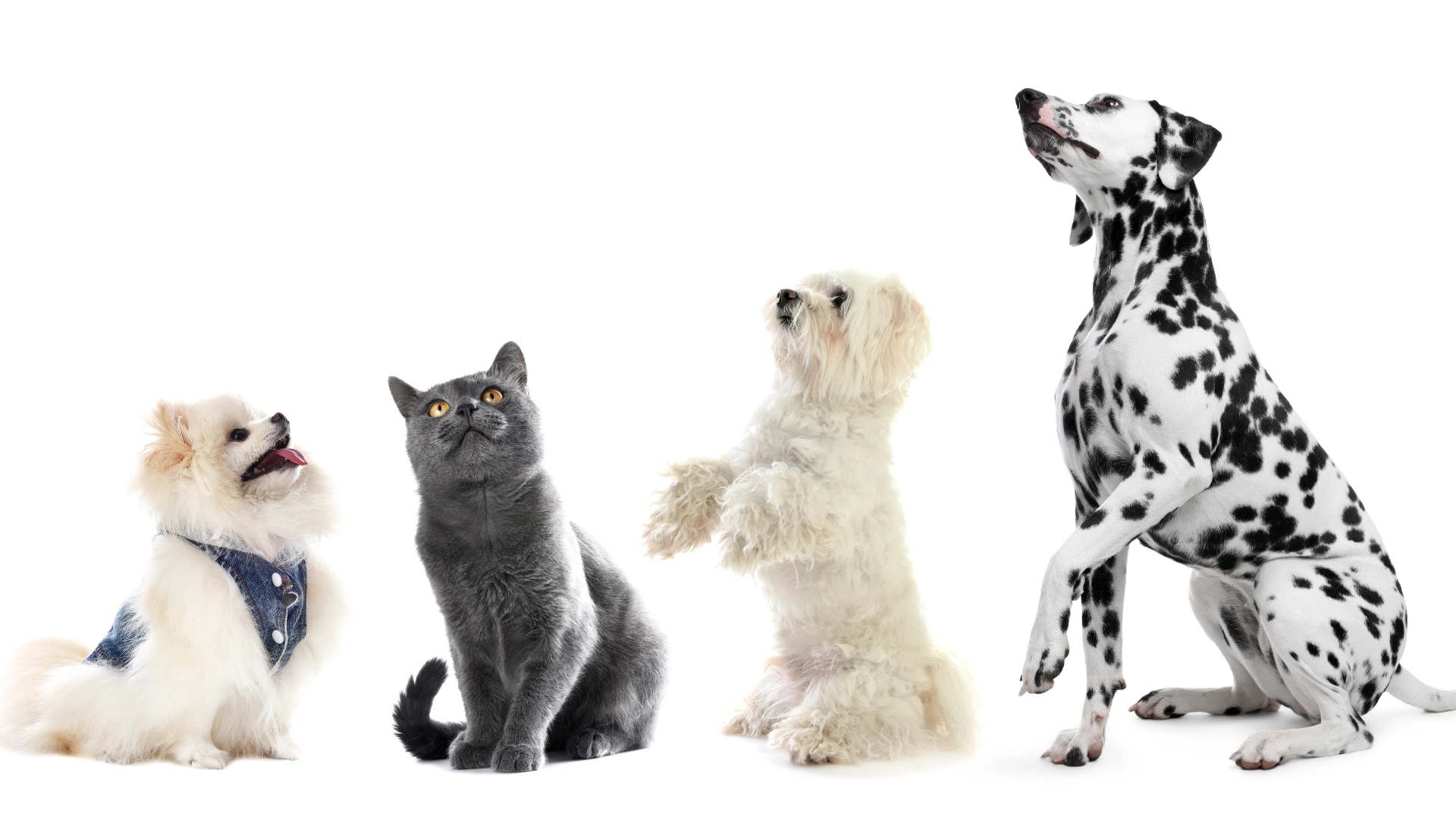
Imagine scrolling through product reviews written not by owners, but by the pets themselves. No marketing spin, no human guesswork—just honest feedback from the ones actually experiencing the shampoo, conditioner, or paw balm.
“Smells too strong.” “Made me itchy.” “Felt soothing, more of this, please.”
While pets can’t type, their skin and behaviour already communicate these reactions clearly. At Crafted, the challenge isn’t imagining these reviews, it’s learning how to interpret them scientifically and design products that pets would genuinely tolerate and benefit from.
If pets could leave ratings, irritation would likely dominate the negative reviews. Excessive scratching, licking, redness, or even subtle behavioural changes all signal discomfort. Unlike humans, pets can’t rationalise irritation, so even mild disruption can become a persistent stressor, particularly for animals with sensitive skin.
From a formulation perspective, irritation often arises from overly harsh surfactant systems that strip natural oils, fragrance components that overwhelm or sensitise, or preservatives and actives used at suboptimal levels. A “gentle” label alone is not sufficient. True mildness comes from carefully balanced systems where cleansing performance does not compromise skin integrity. If pets could express it, the message would be simple: clean effectively, but without causing discomfort.
Scent presents another area where human preference and animal experience diverge significantly. Consumers often equate strong fragrance with cleanliness, yet pets have far more sensitive olfactory systems. What smells pleasant or fresh to a human can be overpowering or even distressing to an animal.
A pet’s perspective might be less enthusiastic about heavily fragranced products, favouring instead a more neutral or subtle scent. This raises important formulation considerations: whether fragrance is necessary at all, how to minimise allergenic components, and whether low-scent or fragrance-free options should be positioned as premium rather than secondary choices. Respecting the sensory experience of the animal becomes just as important as meeting human expectations.
The skin barrier, meanwhile, acts as a quieter but equally important reviewer. Damage to this barrier may not produce immediate, visible reactions, but it can lead to long-term issues such as dryness, flakiness, increased sensitivity, and susceptibility to environmental stressors or infections.
Effective formulations prioritise maintaining and supporting this barrier. This includes preserving lipid balance, aligning with species-specific pH levels, incorporating ingredients that reinforce hydration and structure, and avoiding cumulative damage through repeated use. When the skin barrier is well supported, the absence of negative signs becomes the strongest indicator of success.
This perspective highlights a fundamental truth: the real end user is not the purchaser, but the pet. Product inventors must balance owner expectations around cleanliness and scent with veterinary considerations and, critically, the lived sensory and physiological experience of the animal.
Although pets cannot provide written reviews, their responses are measurable. Behavioural cues after use, dermatological assessments, and objective measures such as trans-epidermal water loss all provide valuable insight. These signals allow formulators to translate silent feedback into data-driven improvements.
Ultimately, if pets could review their grooming products, the highest-rated formulations would not necessarily be the most fragranced or visually appealing. They would be the ones that avoid irritation, respect the animal’s sensory environment, and preserve the integrity of the skin barrier.
In practice, the best outcome is often the least noticeable one: a product that performs effectively without causing any adverse reaction. For pets, that absence of discomfort would be the closest equivalent to a five-star review.
Ready to create your own gentle, scent-free pet care products that truly care for sensitive coats and skin? Discover how the team at www.craftedco.uk can help bring your ideas to life.
Bajwa, J. (2025) Shampoo therapy in veterinary dermatology: Benefits and practical tips. Canadian Veterinary Journal, 66(12), pp. 1354–1357. Available at: https://pmc.ncbi.nlm.nih.gov/articles/PMC12825626/ (Accessed: 26 March 2026).
Bear & Kind (2025) Dog shampoo ingredients to avoid: What every dog mum needs to know. Available at: https://www.bearandkind.com.au/post/dog-shampoo-ingredients-to-avoid-what-every-dog-mum-needs-to-know (Accessed: 26 March 2026).
(Author(s) not specified) (2024) Update on the skin barrier, cutaneous microbiome and host interactions in dogs. Veterinary Dermatology. Available at: https://www.ovid.com/journals/vetd/fulltext/10.1111/vde.13215~update-on-the-skin-barrier-cutaneous-microbiome-and-host (Accessed: 26 March 2026).